So Google gets a new CEO, and the leaders form a parent company named Alphabet.
I've written quite a lot about Google's ability to change, and pressure reinventing themselves out of being an ad agency.
Looks like they've come to the conclusion that they can't. Google will remain Google, and Alphabet will be... Something else?
The real question is, if you don't change the people in charge, will you be able to do new things?
Time will tell. One thing is certain: They have enough cash to begin with.
Monday, August 10, 2015

Tuesday, July 21, 2015
Don't solve this.
Part of the fun in building a new product is creating and writing it. A lot of the creation process includes problem solving - We need to do this feature, we need to create an interface for that etc. etc.
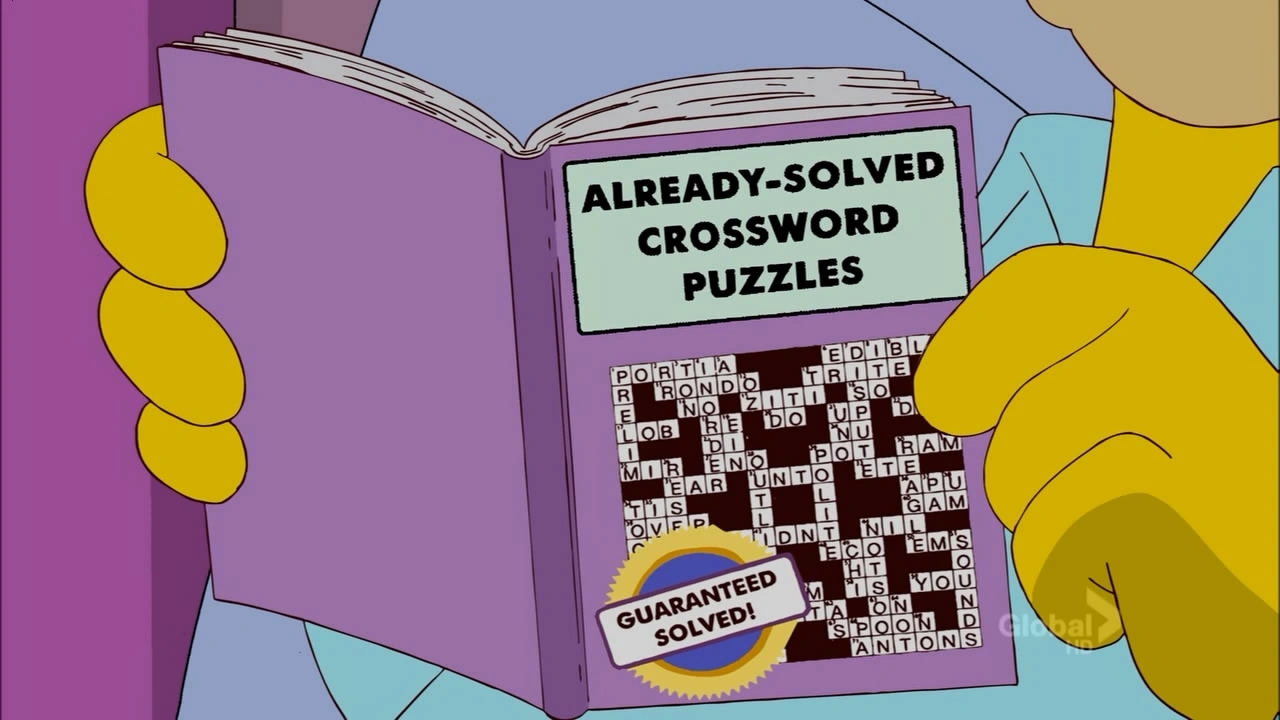
However, a lot of these problems have already been solved.
Don't waste your time re-solving problems yourself in an early stage. Do some research - You'll most likely find off-the-shelf components, even if they're not 'tailor made' for your needs.
Put your efforts on your new product, not on re-solving problems that were already solved.
This will save you a lot of time to focus on what's really important - Your value.

However, a lot of these problems have already been solved.
Don't waste your time re-solving problems yourself in an early stage. Do some research - You'll most likely find off-the-shelf components, even if they're not 'tailor made' for your needs.
Put your efforts on your new product, not on re-solving problems that were already solved.
This will save you a lot of time to focus on what's really important - Your value.
Sunday, July 19, 2015
Ad Blocking - A different approach
This is nice:
Wired (And probably other content sites) is now making a lot of its cash from displaying ads.
However, as ad blockers are common practice, this hurts their living. A lot.
As solutions like DSERO are getting more and more common, there's also the direct approach method.
Worked in my case. I've whitelisted Wired.

Wired (And probably other content sites) is now making a lot of its cash from displaying ads.
However, as ad blockers are common practice, this hurts their living. A lot.
As solutions like DSERO are getting more and more common, there's also the direct approach method.
Worked in my case. I've whitelisted Wired.
Friday, April 24, 2015
How Netflix cracked the formula for hit shows
I'm a sucker for comics. Specifically super hero comics. And, after seeing Netflix's Daredevil, I was taken by how accurate and well done it is. It's one of the best adaptations I've seen to a comic series. Fast paced, good action, just blunt and dark enough.
That got me thinking - How the hell did they do that? After "Orange is the new black" and "House of cards", Netflix seem to be churning out great TV, again and again.
The answer is simple. Netflix, which started as a mail rental service (Just because broadband infrastructure wasn't relevant back then) and moved on to online video rental, simply know exactly what we want as viewers.
They know which movies we like.
Which movies we watch until the end, and which movies we "break" in the middle.
They also know which scenes we run over and over again.
By tagging every scene in every content, they have the ability to create the perfect show for each one of their viewers. They can actually make script decisions (Exactly how the story will be built) according to data.
Furthermore - In the future, story would not be linear as we know it, but every subscriber will get his own, personal, customised version of the show. Yoni Bloch's Interlude might actually close this gap from the production end.
That's pretty amazing.

That got me thinking - How the hell did they do that? After "Orange is the new black" and "House of cards", Netflix seem to be churning out great TV, again and again.
The answer is simple. Netflix, which started as a mail rental service (Just because broadband infrastructure wasn't relevant back then) and moved on to online video rental, simply know exactly what we want as viewers.
They know which movies we like.
Which movies we watch until the end, and which movies we "break" in the middle.
They also know which scenes we run over and over again.
By tagging every scene in every content, they have the ability to create the perfect show for each one of their viewers. They can actually make script decisions (Exactly how the story will be built) according to data.
Furthermore - In the future, story would not be linear as we know it, but every subscriber will get his own, personal, customised version of the show. Yoni Bloch's Interlude might actually close this gap from the production end.
That's pretty amazing.
Monday, March 9, 2015
That Magic Factor
Apple came out very strong from yesterday's event.
Though nothing's really new (Macbook model was long due, though it's much more stunning than I've expected), there is one thing I take from this:
The Magic Factor.
Watch wearables, and successful ones, exist for years now. Garmin, Pebble, Android wear - They're all there. But still, none of them generates the excitement that the Apple watch does.
Than I've looked at last year's major Apple releases, and found out that each year, there was a feature released that was either magical or breakthrough - None of the competitors had it, and it worked like magic:
- Retina screen (iPad and than Macbook Pro)
- Macbook air battery life
- iPad mini form factor
- Touch ID
- iMac 5K
(And now) The watch, force touch, HR monitor, research kit...
Apple seems to have a 'game changer' out at least once a year. One thing that creates a buzz. When was the last time you were THAT excited about a product from Microsoft, Samsung or Google?
Though nothing's really new (Macbook model was long due, though it's much more stunning than I've expected), there is one thing I take from this:
The Magic Factor.
Watch wearables, and successful ones, exist for years now. Garmin, Pebble, Android wear - They're all there. But still, none of them generates the excitement that the Apple watch does.
Than I've looked at last year's major Apple releases, and found out that each year, there was a feature released that was either magical or breakthrough - None of the competitors had it, and it worked like magic:
- Retina screen (iPad and than Macbook Pro)
- Macbook air battery life
- iPad mini form factor
- Touch ID
- iMac 5K
(And now) The watch, force touch, HR monitor, research kit...
Apple seems to have a 'game changer' out at least once a year. One thing that creates a buzz. When was the last time you were THAT excited about a product from Microsoft, Samsung or Google?
 |
| My Next Laptop |
Monday, February 16, 2015
Google, The One Trick Unicorn.
A lot of people like having the discussion of picturing Google as this evil, all seeing dystopian future type conglomerate.
While Google does all but admitting to be one (A monopoly with more power than politicians, buying AI and robotic companies, creating self driving cars etc.), it's still a bit far from reality.
So let's take a step back, and see what Google is. It's the biggest ad tech company in the world. Google makes money from pushing ads.
Not a content company. Not a hardware/ space/ AI company. Not a social network, email provider. Not a hosting company.
A huge ad company.
How big is it?
It's about as big as Microsoft in terms of market capacity, but earns 44% less. And Microsoft does a lot more business than just ads.
Google is almost twice as big as Facebook, but Facebook is leaner and growing like mad these days - And video monetising is yet to come.
But the biggest fear of Google, being a one trick unicorn (I refuse to call Google a pony), is being disrupted. Because people are aching to disrupt them.
So Google is not just trying to take over the world. It MUST do that in order to survive. It needs another meaningful business. Something that IBM, Apple, Microsoft and other tech giants which are here to stay have done.
While Google does all but admitting to be one (A monopoly with more power than politicians, buying AI and robotic companies, creating self driving cars etc.), it's still a bit far from reality.
So let's take a step back, and see what Google is. It's the biggest ad tech company in the world. Google makes money from pushing ads.
Not a content company. Not a hardware/ space/ AI company. Not a social network, email provider. Not a hosting company.
A huge ad company.
How big is it?
It's about as big as Microsoft in terms of market capacity, but earns 44% less. And Microsoft does a lot more business than just ads.
Google is almost twice as big as Facebook, but Facebook is leaner and growing like mad these days - And video monetising is yet to come.
But the biggest fear of Google, being a one trick unicorn (I refuse to call Google a pony), is being disrupted. Because people are aching to disrupt them.
So Google is not just trying to take over the world. It MUST do that in order to survive. It needs another meaningful business. Something that IBM, Apple, Microsoft and other tech giants which are here to stay have done.
Sunday, February 1, 2015
The Cloud Will Be Disrupted.
The cloud is where it's all at.. A centralised, managed, virtual place, where all the data and logic go. It's comfortable. It's better than in house IT. It's safer than keeping your docs on your PC.
For my 100th blog post, I would like to make a careful prediction about the future of applications.
Like traditional IT before, the cloud also has its drawbacks. The biggest one: It's not really free, and it's not really yours.
The docs you put on Google, mails you send via your free provider, images you post on Facebook, files you put on dropbox - Unless you start paying a monthly tax for these conglomerates, is theirs to use, and sometimes delete.
Some of the big companies built an eco system (Google, Facebook, but also airBNB, Uber and a lot of the shared economy companies), which gets a lot of the population to be dependent on them for their monthly pay check.
Some of these companies have enough cash and political power to bend governments.
The shared economy is best for the customer, however it puts a lot of power in the hands of too few companies. Imagine that all taxi drivers at the states belong to Uber.
Part of the fear of societies and companies from bitcoin is not the currency itself, but the democratic, P2P model of its application - A distributed application, in which logic, as well as data, could be shared by every user, not just by the service provider - Because every user is, essentially, a service provider.
Imagine an airBNB service hosted by every airBNB user, containing all the users in his country - Without the need to pay commission to the airBNB. Or a 'floating' Uber like service, where drivers and customers connect and bid directly.
This will get the prices even lower, and give more to the specific service provider, rather than cut a fat commission to an already fat company.
The infrastructure is already there - In my opinion, we will start see those applications during the coming years. Like P2P shook the media world, decentralised applications will shake and disrupt the cloud.

For my 100th blog post, I would like to make a careful prediction about the future of applications.
Like traditional IT before, the cloud also has its drawbacks. The biggest one: It's not really free, and it's not really yours.
The docs you put on Google, mails you send via your free provider, images you post on Facebook, files you put on dropbox - Unless you start paying a monthly tax for these conglomerates, is theirs to use, and sometimes delete.
Some of the big companies built an eco system (Google, Facebook, but also airBNB, Uber and a lot of the shared economy companies), which gets a lot of the population to be dependent on them for their monthly pay check.
Some of these companies have enough cash and political power to bend governments.
The shared economy is best for the customer, however it puts a lot of power in the hands of too few companies. Imagine that all taxi drivers at the states belong to Uber.
Part of the fear of societies and companies from bitcoin is not the currency itself, but the democratic, P2P model of its application - A distributed application, in which logic, as well as data, could be shared by every user, not just by the service provider - Because every user is, essentially, a service provider.
Imagine an airBNB service hosted by every airBNB user, containing all the users in his country - Without the need to pay commission to the airBNB. Or a 'floating' Uber like service, where drivers and customers connect and bid directly.
This will get the prices even lower, and give more to the specific service provider, rather than cut a fat commission to an already fat company.
The infrastructure is already there - In my opinion, we will start see those applications during the coming years. Like P2P shook the media world, decentralised applications will shake and disrupt the cloud.

Subscribe to:
Posts (Atom)